Category Archives: News

EU Citizens’ Dialogue in Maastricht with Commissioner Elżbieta Bieńkowska

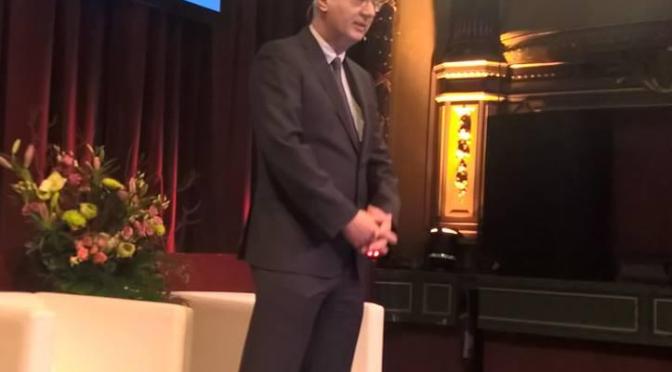
On 25 January 2018, in a special event to mark the 25th anniversary of the single market, Commissioner Elżbieta Bieńkowska participated in a Citizens’ Dialogue in Maastricht.

Our co-director Thomas Christiansen giving a brief overview of the challenges still faced by the single market and how to move forward. Commissioner Bieńkowska (Single Market, Industry, Entrepreneurship) talked about her mandate and how she recognises the fact that the single market project is still incomplete as, for example, the service industry has still many complications in streamlining how it provides its products.

The event, co-organised with CERiM, was attended by students and staff of UM. The event was record and can be watched here.

“A Passport is Not A Panacea” Ground-breaking research by Maarten Vink on citizenship policy and immigrants

“A passport is not a panacea but it can make a big difference in an immigrant’s life”.

Maarten Vink (Chair of Political Science, UM) was granted funding from European Research Council (ERC) to conduct research on studies the relation between migrant naturalisation and integration. The project, MiLifeStatus, investigates why, how, and for whom legal status transition matter, and how varying policies impact on this relation.

For brief overview of the findings so far, see here, and the MiLifeStatus website for further information on the project: https://www.milifestatus.com/

23 January 2018: Lecture on Holocaust Memory by Ferenc Laczo

In his lecture, he will address some important questions about Holocaust memory such as the role of peripheries and non-German actors.
1. How have German and Eastern European memory cultures been interacting since the fall of communism?
2. How has the interpretation of the genocide against European Jews been transformed as a result?
3. What are the key accomplishments and where are the limits of Europeanising Holocaust memory?

The lecture will take place at MBB aula (Minderbroedersberg 4-6) from 20:00 – 21:45 on January 23, 2018. Entry is free for students, staff, and the public so please share the event! Registration is not required.

Successful Roundtable Discussion on the EU’s future

On 8 December, CERiM organised a roundtable discussion on ‘Debating the EU’s Future: Do we need institutional reforms? Will we get them?’. Edward Best (EIPA), Deirdre Curtin (EUI), Graham Smith (Member of the Cabinet of the European Ombudsman) and Wolfgang Wessels (University of Cologne) shared their thoughts on current reform proposals and recent developments in the European integration process including, among others, the ‘double hat’ proposal for the Presidents of the European Commission and the European Council, the recent initiatives of enhanced cooperation and the issue of democratic representation. These issues gave rise to a lively debate with all attendees. 

Hylke Dijkstra and Anniek de Ruijter publish Special Issue on EU Public-Health-Security Nexus

The special issue is the outcome of a workshop that took place on 21-22 November, 2016 on “Germs, Bioterrorism and Chemical Attacks: Internal and External EU Security Perspectives“. The workshop was organised with members from Maastricht Centre for European Law (MCEL) and CERiM.

Consisting of research articles, reports, case commentaries, and book reviews, they address several salient issues such as the use of biological weapons, chemical terrorism, regulatory oversight bodies, and global and European public health.

To access the articles, please find them here.

Former Finnish Prime Minister Alexander Stubb Gives Lecture in Maastricht

On Thursday, 23 November, CERiM had the honour of welcoming Dr. Alexander Stubb, the former Finnish Prime Minister and current Vice-President of the European Investment Bank, for our second Jean Monnet Lecture of the academic year. In his lecture entitled “The EU and the New World Order”, Stubb reflected on the development of international relations and global politics, highlighting three key dates that have changed international relations: 1945, 1989, and 2016.

Zooming in on 2016, which saw the withdrawal of the United Kingdom from the European Union and the election of Donald Trump, Stubb was concerned with the question: who will fill the power vacuum after the “fall of the Anglo-Saxon world”? Was it time for Europe to step in and if so, how?

In addition to the power vacuum, the world is facing a number of challenges. At the crux of his talk, Stubb identified three mega-trends that will shape and challenge Europe’s capacity to respond. The three mega-trends he focused on were, first, the rise of the aging population, second, increasing digitalisation and the growing role of technology, and lastly, climate change and its impact. Each mega-trend presents Europe with a unique set of challenges and opportunities.

By way of conclusion, Stubb outlined several ways in which Europe can take the lead in filling the power vacuum as well as taking on these mega-trends. He emphasised in particular the need to strengthen European and international institutions, a better engagement with evolving technology to effectively utilise its power, and continued support for international trade.

Despite these new set of challenges, Stubb is positive that things have changed for the better since the start of the European integration process. “Jean Monnet would be amazed at how far European integration has gone” and remains optimistic about the EU despite the ongoing crises affecting Europe, assuring the audience that “It will sort itself out”.

The next speaker CERiM looks forward to welcoming for a Jean Monnet lecture is the former German finance minister and 2013 candidate for Chancellor, Dr Peer Steinbrueck who will join us on 8 March 2018.

8 December 2017: Register for Roundtable on “Debating the EU’s Future: Do we need institutional reforms? Will we get them?”

On 8 December 2017, CERiM will be holding a roundtable debate on “Debating the EU’s Future: Do we need institutional reforms? Will we get them?”. The future of the EU is uncertain. Given numerous developments such as the refugee crisis and Brexit, all in the past decade, these developments have challenged the EU’s capacity and ability to deal with them and have left Europeans and the world in doubt and anxious about the next steps. Join us for a thought-provoking debate on how the EU can move forward in these times of crises.

The event is organised following the end of the Europe Calling initiative celebrating 25 years of the Maastricht Treaty.

The roundtable is chaired by Thomas Christiansen and the speakers are:

•    Deirdre Curtin, Professor of EU Law, European University Institute
•    Edward Best, Head of Unit, European Institute of Public Administration (EIPA)
•    Graham Smith, Member of Cabinet of the European Ombudsman
•    Wolfgang Wessels, Director of the Centre for Turkey and European Union Studies (CETEUS), University of Cologne

Event Timing: 10:15 – 13:00

Event Address: C-1.03 (Colloquium room 1), Tongersestraat 53 (School of Business and Economics), Maastricht

Registration is based upon a first-come, first-served basis: registration form.

For more information, please contact us at cerim@maastrichtuniversity.nl. Follow us on Facebook @Centre for European Research in Maastricht, Twitter @UM_CERiM, and our website at https://cerim.maastrichtuniversity.nl/events for the latest updates and changes to the event

30 November – 1 December 2017: Ellen Vos to present at Workshop on Unpacking the ‘Accountability Paradox’ in Expert-based Decision-making

The entrenchment of expert knowledge in legal and quasi-legal decision-making is a key feature in a wide variety of areas, ranging from economic and financial governance to environment, health and safety regulation, or more horizontally as regards digital technologies and data protection At the European, transnational and international levels, expert-based decision-making processes are being shaped increasingly through a diversity of institutions and stakeholders, including agencies, private-public partnerships, think tanks, regulatory networks, or, more generally, assemblages of different actors. The direct or indirect production of legally relevant decisions by experts, and their exercise of public authority in various guises, has been recurrently considered as problematic. In particular, enabling accountability for expert-based decision-making remains a thorny issue, which requires urgent clarification.

This workshop aims at dissecting some of the salient conceptual, legal and practical problems in establishing accountability of the expert decision-maker complex. It tackles in particular the apparent ‘paradox’ whereby formal mechanisms and processes in place may have a limited potential to enable effective accountability of the expert decision-maker complex, among others because of the ‘knowledge asymmetry’ hurdle between experts and accountability fora.

The workshop brings together top academics and practitioners to reflect on the possibilities and limits of establishing accountability for expert decision-making. Contributions combine discussions at a normative and conceptual level with more concrete and targeted investigations in the following areas: (1) Economic and Financial Governance; (2) Environment, Health and Safety Governance; (3) Internet, Digitization and Data Protection. The results of the workshop will generate a more systematic understanding of similarities and differences of institutional mechanisms by which experts can be and are called to account.

The workshop is a joint activity of the Rethinking the Rule of Law in an Era of Globalisation, Privatisation, and Multiculturalisation and the Research Project Rethinking Global Technocracy: An inquiry into the Accountability of Global Regulatory Scientific Institutions (GRSIs).

Date: 30 November – 1 December, 2017
Location: Erasmus School of Law, Erasmus University Rotterdam

Attendance of the event is free, but registration is required! You can find the programme and registration form here (bottom of page).