All posts by centreofeuropeanresearchinmaastricht

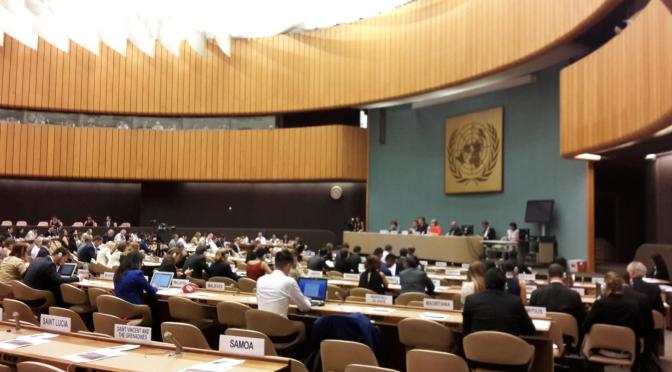
MCEL/CERiM Academic Opening Conference 2017-2018: “‘Multi-Speed Europe, Differentiated Integration and The Future of the EU’.”

The conference brought together external speakers and MCEL and CERiM researchers working on this topic, who had the opportunity to summarise and discuss their findings and outline further research for the upcoming years.

After the opening by MCEL and CERiM co-director Prof. Ellen Vos, in Panel I (Multi-speed Europe as a Legal and Policy Concept), chaired by MCEL co-director Prof. Bruno de Witte, Bernd Martenczuk (Legal Service of the European Commission) gave a detailed explanation of the legal framework of differentiated integration, while the Dean of University College Maastricht, Prof. Mathieu Segers provided valuable insights on ‘Differentiated integration since the Maastricht Treaty: past, present and future’.

Panel II focused on the academic perspectives on differentiated integration and was chaired by CERiM researcher Prof. Sophie Vanhoonacker. Maciej Kisilowski, Associate Prof. at CEU Budapest, gave a presentation on ‘Conditionality 2.0’, followed by CERiM researcher Prof. Esther Versluis, presenting differentiated integration as an absolute necessity in order to regulate complex policy problems. The last presentation of the Panel was delivered by Prof. Bruno de Witte on ‘The Future of Differentiation and the Obstacle of Treaty Revision’.

The conference was concluded by the launch of the recently published volume ‘Between Flexibility and Disintegration, The Trajectory of Differentiation in EU Law’, edited by MCEL and CERiM researchers. MCEL researcher, Associate Prof. Maja Brkan chaired the discussion between Prof. Michael Dougan (Liverpool University) and Assistant Prof. Natassa Athanasiadou, MCEL member, followed by the closing by MCEL member, Associate Prof. Andrea Ott.
CERiM welcomes five new members

The five new members are a mix of senior and junior scholars currently stationed at the Faculty of Law, Maastricht University.

Karolina Podstawa is a lecturer at Maastricht University. She holds a PhD from the European University Institute and MAs in Law and Administration (2008), English Language and Literature (2009) from the University of Łódź, Poland as well as the EUI (2009). She acted as a project manager for the EUI based Centre for Judicial Cooperation where she dealt with and contributed substantively both to internally and externally funded projects. Within this framework she organized and conducted quasi-training activities for judges collaborating widely with international judicial organizations and national judicial entities. Her research interests lie in the area of internal and external human rights policies of the European Union (external policy tools were a subject of her PhD thesis), data protection, judicial dialogue and cooperation.

Bilyana Petkova is Assistant Professor of International and European law at the Faculty of Law of Maastricht University. She holds a Ph.D. in International Relations from the University of Kent at Brussels and a Master in Legal Studies from the Yale Law School. While at Yale, she worked as a Research Assistant for Professors Judith Resnik and Reva Siegel and taught seminars at the summer program Yale Young Global Scholars. Bilyana received her first MA in European Studies from the University of Maastricht and BA in International and European Studies from Panteion University, Athens. She was also a Visiting Scholar at the Law Department of the European University Institute in Florence, a consultant on EU data protection in Bonn, and a trainee at the European Commission’s Representation in Athens. Her academic interests are in comparative constitutional law, EU law, federalism and fundamental rights.

Natassa Athanasiadou is Assistant Professor of European Union law at the Faculty of Law of Maastricht University since April 2017. Previously, she worked for the European Commission, first as an intern in the Legal Service (Institutions Team) and subsequently as a Legal Officer advising on matters of EU institutional, administrative and civil service law. Prior to her employment at the European Commission, she worked as a research scholar at the Center for International and European Economic Law in Thessaloniki and as a qualified lawyer of the Bar Association of Thessaloniki. Natassa’s research interests lie mainly in the area of European institutional and administrative law, comparative administrative law and fundamental rights, in particular procedural rights.

Eva van Ooij is a PhD student and is researching the subject of highly mobile professionals within the cultural industries.

Mathias Müller is a PhD student extra muros and is researching the subject of access to information on monitoring EU environmental law.

Dr. Diane Fromage appointed CERiM’s research coordinator

Diane will be working alongside CERiM’s current team, consisting of co-directors Prof. Dr. Thomas Christiansen and Prof. Dr. Ellen Vos, research coordinator Dr. Johan Adriaensen, and centre manager, Shelly Tsui. 

Diane was previously Assistant Professor in EU Law at Utrecht University and a Max Weber Postdoctoral fellow in Law at the European University Institute of Florence, Italy. She obtained her PhD in November 2013 from the University of Pavia (Italy) and Pompeu Fabra (Barcelona, Spain). Currently, since February 2017, she is Assistant Professor in European Law at Maastricht University. Her research focuses on National and Regional parliaments in the European Union and, more generally, on any topic related to parliaments in the EU, such as interparliamentary cooperation. She is also interested in independent fiscal institutions and has a specific interest for institutional matters in the EU and in a comparative constitutional perspective.

CERiM Member Natasja Reslow gives presentation at Youth Talent Development Programme of D66

On 1 July Natasja Reslow was invited to give a presentation at Route66, the youth talent development programme of the Dutch political party D66. The theme of the day was future challenges facing the EU, and Natasja’s presentation concerned migration. She introduced EU migration policy to date, and spoke of the need to balance security and mobility; to improve integration processes; to design a humanitarian migration policy; and to break through the discourse and narrative surrounding migration in order to focus on facts.

Dr Vigjilenca Abazi invited to European Parliament for testimony on legal protection of whistleblowers in the EU

CERiM research coordinator, Dr. Vigjilenca Abazi was invited to give an expert testimony at the European Parliament on the legal protection of whistleblowers in the EU Member States. The hearing was held on 21 June and included the rapporteur of the European Parliament on the topic, among many other MEPs and other relevant stakeholders. The European Parliament is in the process of drafting an own initiative report on an EU wide protection for whistle-blowers. The full hearing is available here.

CERiM Member Natasja Reslow participates in session on Migration Governance at United Nations in Geneva

On 19-20 June 2017, Natasja Reslow attended the informal thematic session on international cooperation and governance of migration at the United Nations in Geneva. The session formed part of the preparatory process for the global compact for safe, orderly and regular migration. There were three panels over the course of the two days: an opening panel on international cooperation and governance of migration in all its dimensions; international cooperation during transit, entry and at borders; and international cooperation on return, readmission, integration and reintegration. Participants came both from member states’ representatives to the UN as well as civil society (the Maastricht Centre for Citizenship, Migration and Development was accredited as a stakeholder for the preparatory process for the global compact). Natasja delivered a statement highlighting the importance of designing monitoring and evaluation mechanisms in the global compact on migration. Such mechanisms should be based on more than only statements of actions undertaken; evaluation implies a normative and systematic assessment of the effects of those actions. The global compact should therefore be based on a concise set of clear and measurable objectives, as a baseline against which to assess the actions taken.

The full text of Natasja’s statement will be available on the website of the informal thematic session: http://refugeesmigrants.un.org/international-cooperation

CERiM Member Prof Marjan Peeters delivered presentation at Dutch Embassy in Brussels

Prof Marjan Peeters delivered a presentation on “EU climate law and its impact on national climate legislation” during the workshop “Role and functioning of national and regional climate laws and climate committees in the light of EU climate and energy policies” organised by the EEAC (European Environment and Sustainable Development Advisory Councils), Working group on energy and climate change, Brussels (Dutch Embassy) Monday 19 June 2017.

CERiM Co-Director Thomas Christiansen co-edits a special issue of the Asia Europe Journal

A publication of a special issue of the Asia Europe Journal, co-edited by CERiM Co-Director Thomas Christiansen, has recently been published by Springer. The issue entitled, The Rise of China: Challenges and Opportunities for the European Union, can be accessed via the following link

This special issue examines Europe’s response to the steady and dramatic rise of China over the past two decades. In particular, it explores the challenges as well as the many instances of engagement that define their relations today across a number of policy areas, including economic, diplomatic, and security relations. The contributions to this special issue demonstrate the varied, multi-faceted and to some extent contradictory nature of EU-China relations. The two sides are in an ever-closer economic embrace, yet they remain distant and occasionally antagonistic with respect to security concerns or normative discourses.

Report on Second Annual CERiM Conference: Contestation of Expertise in the European Union

The conference welcomed a number of key experts and practitioners from various disciplines. The day consisted of three panels, each addressing a different aspect (e.g. legal, epistemological, and scientific) on the relationship between expertise, knowledge, and policy-making in the EU. The first panel on epistemic and public contestation of expertise, chaired by Anna Herranz-Surralles, consisted of presentations by Dr. Marija Bartl (University of Amsterdam) and Johan Christensen (Leiden University) on an institutionalist approach towards understanding the use of knowledge in organizations and the use of academic research in advisory reports in Norway, respectively. The following panels addressed topics such as the use of expertise by the EEAS (presented by Sophie Vanhoonacker) and scientific knowledge in national courts in the Netherlands (presented by Marjan Peeters) The conference ended with a roundtable, chaired by Ellen Vos, on the role of expertise in EU policy-making. Participants included Anthony Teasdale (Director-General of the EP Research Service) and Arjen Meij (Former Judge in the General Court of the EU). The full programme and list of participants can be found here, though not all were able to present. For a more detailed report on the event, please find it below.