All posts by centreofeuropeanresearchinmaastricht

Summary of CERiM Informal Event on Awkward Membership in the EU

In recent years, some Member States of the EU have turned in ‘awkward’ members who increasingly context the EU’s rules and authority, or even their belonging to the block itself. The United Kingdom’s decision to leave the EU, but also the Polish and the Hungarian cases are illustrative of these tendencies. More generally, Euroscepticism is on the rise in numerous Member States.

How can and should the EU react in this context? How have other Member States behaved?

To address these questions, we invited a panel, chaired by Monica Claes, of four speakers to discuss developments in Hungary, Poland, and the UK. Each speaker gave a short presentation before opening up the floor to the audience. Ferenc Laczo (Faculty of Arts and Social Sciences) talked about current developments in Hungary since the 2010 elections and the growing unpopular sentiments against the. Michal Natorski (UNU-MERIT) followed with a case study analysis of Poland and addressed the ongoing controversy about the domestic reform of the judiciary system. Matteo Bonelli (Law Faculty) offered some insight on the tension between EU law and constitutional law and how EU member states sometimes struggle to reconcile the two and the role the Commission plays in enforcing the rule of law. Lastly, Simon Duke (EIPA) gave a nuanced perspective on how the current and common narrative of the UK being the awkward partner does not represent the full picture.

The lively discussion raised a numbers of questions and issues such the factors and conditions that foster increasing Europscepticism and what can be done to combat them, the extent to which the Commission can intervene in domestic issues that seem to go counter to EU rule of law, and evaluating the understanding of ‘awkward membership’ as not only referring to the UK but also current member states that have had a history of going against EU principles.

After the session, the speakers were invited to write a short blog on their thoughts and they will be posted as a short series of related blogs. You can find them here in the blog section of our website.

Summary of Jean Monnet Lecture with Peer Steinbrück

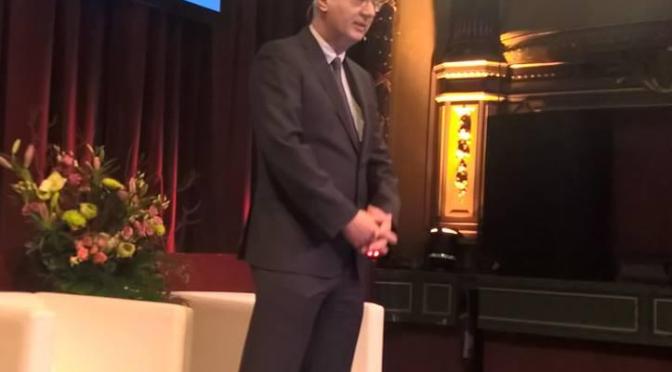
In his lecture titled “Germany’s Role in the European Union: Towards a Reform of the Eurozone”, he addressed three main developments that characterise current politics: firstly, we are no longer in the post-Soviet ‘era of peace’, secondly, power vacuum left by the withdrawal of the United States from the current state of politics, thirdly, the rise of China and its silk road investments, fourthly, the rise of failing states, the refugee crisis and its impact on societies, such as the rise of right-wing political sentiments. Overall, Steinbrück solemnly declared that “Europe is not in a good condition”.

In surveying the current state of play in Europe, he identified nine main challenges that, depending on how they are dealt with in the coming years, will determine the future of the EU:

  • Stabilisation of the European Monetary Union
  • Completion of the Banking Union
  • Continental Europe needs to elaborate on a coherent common foreign security policy (Russia, Eastern Europe, Africa, etc)
  • An agreement and strategy on the distribution of refugees in Europe
  • Strengthening of Frontex to secure external borders as the burden has been left to Greece and Italy
  • Current foreign aid policy towards Africa needs to be reformed
  • Combat tax evasion and avoidance, perhaps through the harmonisation of tax systems in Europe
  • Reform of European institutions
  • Principle of subsidiarity should be pursued by the Commission as they should be responsible for cross-border issues but not for national issues

On specifically how Germany intends to address these challenges faced by Europe, Steinbrück did not have a solution but offered an explanation as to what might work and what might be a model for other member states to follow. He reflected on the current German government and characterised it as committed to a pro-EU agenda, the free market, and supporting the social market. However, on the handling of financial turmoil, Germany works under a contrary paradigm to that of the Mediterranean model: short-term and goal-oriented reforms compared to deficit spending. As there is much dissatisfaction, and resentment even, towards how the Greek financial crisis was managed, Steinbrück suggested that a fundamental change in paradigm in crisis management is needed as this impacts European solidarity. Furthermore, given Germany’s heavy export market, which makes up a large share of Germany’s GDP, Germany has a responsibility to ensure that its neighbors are doing well.

After his lecture, Steinbrück took questions from the audience, leading to a lively discussion and sharing of his thoughts on topics ranging from Germany and its role in European security, the future of social democracy with Germany and France’s current relationship as the example, the likelihood of a coherent European foreign policy towards Russia and China, the possibility of a European finance minister, the possibility of enlargement of EU monetary and membership, and the likelihood of harmonisation of tax rates in the EU.

Report from Workshop on EU Policy Evaluation

Just before carnival, Paul Stephenson (FaSoS), with Prof. Frans Leeuw (Law), held a workshop at Campus Brussels on Policy Evaluation in the EU. They welcomed 46 participants over two days for 22 papers over 8 panels: a mix of junior and senior academics, and various practitioners from the EU institutions and beyond, including the European Parliament, European Commission’s Joint Research Centre, the Regulatory Scrutiny Board and European Court of Auditors.

The workshop was co-financed by the Centre for European Research in Maastricht (CERiM), FASoS Research Stimulation Fund (RSF), Stichting Universiteitsfond Limburg (SWOL) and the Law Faculty of Maastricht University.

The aim of the workshop was to stimulate debate on approaches to policy evaluation in the EU by bring together EU policy researchers with scholars from the evaluation community. We sought to explore conceptual and methodological approaches to engaging in evaluation, and to take critical perspectives on current evaluation practices in the world of policy making and implementation. Research papers were encouraged on the following themes:

-Approaches to EU policy, programme, or project evaluation
-Ex ante, mid term and ex post perspectives on policy analysis, including monitoring
-Theories, concepts and frameworks applied in the evaluation of EU policy
-Perspectives on effectiveness, efficiency and economy in EU policy studies
-The link between implementation and evaluation and/or evaluation and agenda-setting
-Gauging success and failure in EU policy analysis, including framing and discourse
-Contributions from different perspectives on evaluation, and in particular, realist evaluations of policy making and implementation
-Evaluation actors, institutions and evaluation culture in the EU

For the list of papers and panels please check the CERiM website. For pictures of the event, please find them here.

19 March 2018: Jean Monnet Lecture with Peer Steinbrück

On Monday 19 March, the Centre for European Research in Maastricht (CERiM) is pleased to welcome Peer Steinbrück, the former German Federal Minister of Finance and 2013 candidate for Chancellor, for a lecture on ‘Germany’s Role in the European Union: Towards a Reform of the Eurozone?’.

The format of the event will be a 45 minute lecture, followed by a round of Q&As by the audience for the remaining time.

Date: Monday 19 March
Time: 18:30 – 20:00
Location: Aula, Minderbroederberg, 4-6 Maastricht

Bio of the speaker
Peer Steinbrück, member of the Social Democratic Party (SPD), was Federal Minister of Finance (2005 to 2009) and Prime Minister of the State of North Rhine-Westphalia (2002 to 2005). In 2013, he ran for Chancellor as opposition candidate but failed to carry the election. Having resigned from his mandate in the Bundestag in September of 2016, Peer Steinbrück now engaged in the founding of the Bundeskanzler-Helmut-Schmidt-Stiftung. As economist by training, he was Head of the office of the Minister President of North Rhine-Westphalia, Johannes Rau, from 1986 to 1990. In 1993, he became Minister of Economic Affairs and Infrastructure in the state of Schleswig-Holstein. He then returned to North Rhine-Westphalia, where he became the Minister of Economic Affairs and Infrastructure in 1998 and Finance Minister in 2000.

EU Citizens’ Dialogue in Maastricht with Commissioner Elżbieta Bieńkowska

On 25 January 2018, in a special event to mark the 25th anniversary of the single market, Commissioner Elżbieta Bieńkowska participated in a Citizens’ Dialogue in Maastricht.

Our co-director Thomas Christiansen giving a brief overview of the challenges still faced by the single market and how to move forward. Commissioner Bieńkowska (Single Market, Industry, Entrepreneurship) talked about her mandate and how she recognises the fact that the single market project is still incomplete as, for example, the service industry has still many complications in streamlining how it provides its products.

The event, co-organised with CERiM, was attended by students and staff of UM. The event was record and can be watched here.

“A Passport is Not A Panacea” Ground-breaking research by Maarten Vink on citizenship policy and immigrants

“A passport is not a panacea but it can make a big difference in an immigrant’s life”.

Maarten Vink (Chair of Political Science, UM) was granted funding from European Research Council (ERC) to conduct research on studies the relation between migrant naturalisation and integration. The project, MiLifeStatus, investigates why, how, and for whom legal status transition matter, and how varying policies impact on this relation.

For brief overview of the findings so far, see here, and the MiLifeStatus website for further information on the project: https://www.milifestatus.com/

23 January 2018: Lecture on Holocaust Memory by Ferenc Laczo

In his lecture, he will address some important questions about Holocaust memory such as the role of peripheries and non-German actors.
1. How have German and Eastern European memory cultures been interacting since the fall of communism?
2. How has the interpretation of the genocide against European Jews been transformed as a result?
3. What are the key accomplishments and where are the limits of Europeanising Holocaust memory?

The lecture will take place at MBB aula (Minderbroedersberg 4-6) from 20:00 – 21:45 on January 23, 2018. Entry is free for students, staff, and the public so please share the event! Registration is not required.

Successful Roundtable Discussion on the EU’s future

On 8 December, CERiM organised a roundtable discussion on ‘Debating the EU’s Future: Do we need institutional reforms? Will we get them?’. Edward Best (EIPA), Deirdre Curtin (EUI), Graham Smith (Member of the Cabinet of the European Ombudsman) and Wolfgang Wessels (University of Cologne) shared their thoughts on current reform proposals and recent developments in the European integration process including, among others, the ‘double hat’ proposal for the Presidents of the European Commission and the European Council, the recent initiatives of enhanced cooperation and the issue of democratic representation. These issues gave rise to a lively debate with all attendees. 

Hylke Dijkstra and Anniek de Ruijter publish Special Issue on EU Public-Health-Security Nexus

The special issue is the outcome of a workshop that took place on 21-22 November, 2016 on “Germs, Bioterrorism and Chemical Attacks: Internal and External EU Security Perspectives“. The workshop was organised with members from Maastricht Centre for European Law (MCEL) and CERiM.

Consisting of research articles, reports, case commentaries, and book reviews, they address several salient issues such as the use of biological weapons, chemical terrorism, regulatory oversight bodies, and global and European public health.

To access the articles, please find them here.